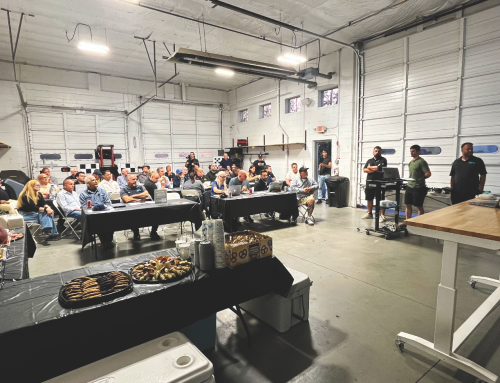
 6.29.26 – The days of taking the keys, attempting to negotiate with the insurer and getting the car back to the customer in a relatively smooth fashion are long over. That old model was built for a different time. Today, claims resolution is more complex than ever – and so are the vehicles. This reality was the foundation for the Alliance of Automotive Service Providers of New Jersey’s (AASP/NJ) “New Rules, New Tools: A Shop Owner’s Playbook to Win in Today’s Market” general meeting held at the Holiday Inn in Clark last week.
Led by AASP/NJ President Ken Miller, Board member Dennis Cataldo, Jr. and Collision Chairman Jerry McNee, discussion focused on the resources and tools that can be used to manage today’s more complicated claims environment such as the Right to Appraisal (RTA), assignment of proceeds and small claims court.
Miller shared an eye-opening fact: “The customer doesn’t know what goes on. We have been negotiating for them behind the scenes.”
Consumers have been conditioned by the insurance company to drop their car off. Over time, the customer was removed from the collision repair process and that has to change.
“The new way of settling claims has to involve the customer in their own claim,” Miller added. “Not shielding them from it – making it all visible. The more visibility the customer has in the process, the less the insurance company will play games in the background.”
The Board members shared a recap of their recent meeting with Acting Commissioner Susan Ochs of the New Jersey Department of Banking and Insurance (NJDOBI) stressing the importance of filing complaints. AASP/NJ has a designated email inbox set up for repairers to share their submitted complaints to NJDOBI. Complaints can be forwarded to complaints@aaspnj.org to help AASP/NJ compile this documentation for future meetings with NJDOBI.
Repairers must consider the increasing total loss trend factor. “Insurers are totalling cars so much faster. There are less repairable cars,” Miller noted. “You need to be paid what you need to be paid so you can fix the car properly in order to be sustainable to stay in business.”
More shops are choosing to involve the customer as well as introducing customer pay. When there is a difference between the repair cost and reimbursement cost, it should be presented to the customer, Cataldo explained. Before the claim is settled, documentation should be made available to the customer to back up everything required.
“Once you have the customer on your side, they will already be aware and have an understanding when they hear from the insurance company,” Cataldo said.
Be sure to look for full coverage of the meeting in the July issue of New Jersey Automotive, available at grecopublishing.com.
For more information on AASP/NJ, visit aaspnj.org.